N-Type vs P-Type Solar Panels: Why N-Type Technology Is More Efficient for Industrial Projects
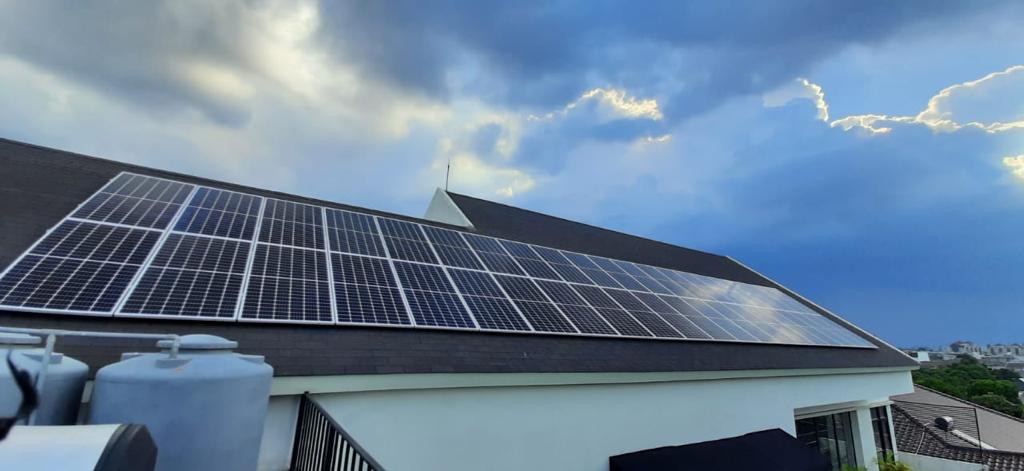
Choosing a solar panel type for an industrial rooftop system means weighing efficiency, degradation rate and long-term energy yield. Two cell technologies dominate the market today: P-type (including PERC) and N-type (including TOPCon and HJT). In general, N-type offers higher efficiency and a lower annual degradation rate than P-type, which is why it is increasingly considered for industrial solar projects.
For factories, warehouses and industrial estates, this difference is more than a technical footnote. A panel’s efficiency and degradation rate shape how much electricity the system produces, how much can be saved on power bills, and how quickly the investment pays for itself (the payback period). Understanding the distinction between P-type and N-type is therefore essential before specifying panels for an industrial rooftop solar project.
Understanding N-Type and P-Type Solar Panel Technology
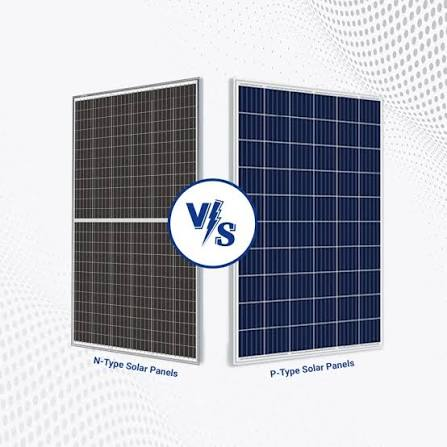
What are P-type and N-type solar cells?
Both are made from crystalline silicon. The difference lies in how the silicon is “doped”, that is, deliberately mixed with a small amount of another element to control its electrical properties.
• P-type cells use silicon doped with boron. Boron gives the wafer an excess of positively charged “holes”.
• N-type cells use silicon doped with phosphorus. Phosphorus gives the wafer an excess of negatively charged electrons.
Why does this difference matter?
Boron doping gives P-type cells an inherent weakness. When exposed to light, boron reacts with the oxygen in the silicon and triggers light-induced degradation (LID), a drop in power output during the early period of use. Phosphorus-doped N-type wafers are essentially free of this problem and are also more tolerant of metallic impurities. As a result, the material quality is more stable and electrons survive longer before they are lost; in technical terms, the carrier lifetime is longer.
How the industry has evolved
P-type PERC dominated the market for more than a decade because its manufacturing process was mature and inexpensive. Its efficiency, however, is now approaching its theoretical limit. N-type is not a new technology; it has been known for a long time. What has changed is that production costs have fallen far enough to make mass manufacturing viable. If you are comparing the types of solar panels available on the market, you will find that almost all of the latest flagship product lines from tier-1 manufacturers are N-type.
Efficiency Differences Between N-Type and P-Type Solar Panels
Energy conversion efficiency
Commercial P-type PERC modules typically reach an efficiency of roughly 20–22%. Commercial N-type TOPCon modules usually fall between 22% and 24%, and some HJT products go higher. Exact figures vary from model to model, so always refer to the datasheet of the product you intend to buy.
A gap of two to three percentage points may sound small. Across a roof of several thousand square metres, however, it can translate into several tens of additional kWp from the same footprint.
Temperature effects
This is one of the most relevant factors for Indonesia. Solar panels lose some of their output as they heat up, and the rate of loss is expressed as the power temperature coefficient. P-type panels generally sit at around −0.34% to −0.35% per degree Celsius, whereas N-type panels typically sit at around −0.29% to −0.30% per degree Celsius, and HJT can be better still.
At midday, the surface of panels mounted on a corrugated metal or metal-deck roof in an industrial area can reach 60–70°C. It is under exactly these conditions that the difference in temperature coefficient begins to show up in daily production.
Degradation and long-term output
Typical specifications for tier-1 products are as follows:
• P-type: first-year degradation of around 2%, followed by roughly 0.5–0.55% per year.
• N-type: first-year degradation of around 1% or less, followed by roughly 0.4% per year.
Small annual differences accumulate. By year 25 to 30, an N-type panel will generally still deliver more power than a P-type panel of the same initial capacity. As a note, when comparing solar panel types, do not look only at the watt-peak rating at the outset; look at the long-term production curve as well.
Advantages of N-Type Technology for Industrial Projects
1. More efficient use of installation area
Industrial roofs have their limits: skylights, ventilation units, maintenance walkways, shading from nearby structures and so on. With higher efficiency per module, more capacity can be installed in the same area. This is especially valuable when roof space, rather than budget, is the main constraint.
2. Better performance at high temperatures
A lower temperature coefficient means a smaller power loss when it is hot. For factories that operate during the day, when solar output and electrical load are both high, this extra contribution shows up directly on the electricity bill.
3. Lower power degradation
The absence of boron–oxygen LID, together with a lower annual degradation rate, keeps energy production more consistent over time. Many N-type manufacturers also offer a linear performance warranty of up to 30 years, with a guaranteed end-of-warranty output that is higher than the typical P-type warranty.
4. Optimised energy production for large-scale operations
Many N-type panels are bifacial, often with a higher bifaciality factor, so the rear side also generates energy from reflected light. For ground-mounted systems, carports or light-coloured, reflective roofs, this can increase yield. Taken together, these factors raise the energy produced per installed kWp and lower the cost per kWh over the lifetime of the system.
Common Types of N-Type Solar Panel Technology
Not all N-type panels are the same. At least two technologies appear most often in the industrial projects we work on. Understanding these N-type variants helps you choose according to your needs, rather than simply following the highest specification.
TOPCon (Tunnel Oxide Passivated Contact)
TOPCon adds an ultra-thin oxide layer and a polysilicon layer to reduce electron losses at the rear of the cell. Its strength is high efficiency combined with a manufacturing process that is relatively close to existing PERC lines, which allows manufacturers to scale up capacity easily. That is why TOPCon is now the most widely available N-type technology. For most industrial rooftop projects, TOPCon is a sensible middle ground between performance and price.
HJT (Heterojunction)
HJT combines crystalline silicon with very thin layers of amorphous silicon. Its defining characteristics are an excellent temperature coefficient, high bifaciality and a lower-temperature manufacturing process. On the other hand, it is generally more expensive, and there are fewer manufacturers to choose from.
Which one should you choose?
• TOPCon: suited to projects that want high efficiency at a competitive price with easy availability.
• HJT: worth considering if the site is very hot, roof space is limited, or you are pursuing maximum yield and are ready for a higher upfront investment.
To compare one solar panel type with another, request the complete datasheet and run a production simulation for your site. That is far more convincing than relying on the efficiency figure in a brochure.
What to Consider Before Choosing N-Type Panels
N-type is not an automatic answer for every project. These are the points we usually discuss with clients before finalising a specification.
1. Upfront price and total cost of ownership. N-type panels are generally slightly more expensive per watt than P-type, although the gap is narrowing as production scales up. More important is to calculate the levelised cost of energy (LCOE), the cost of energy over the lifetime of the system, rather than the price per watt-peak alone. In some cases, the higher initial price is offset by greater energy production.
2. Roof or land area. If the roof is large and the budget is tight, the efficiency gap may not be critical. If roof space is limited, N-type is usually more advantageous because more capacity can be installed in the same area.
3. Electricity demand. Match the system size to the factory’s load profile. A system that is oversized relative to daytime demand will generate surplus energy that is not used optimally, while an undersized system leaves potential savings on the table.
4. Warranty, degradation and the manufacturer’s track record. Check the product warranty (generally 12 to 15 years or more) and the linear performance warranty (25 to 30 years). Also consider the manufacturer’s reputation, certifications and ability to honour its warranties over the long term. A panel with impressive figures on paper means little if its manufacturer cannot be relied upon 15 years from now. Choosing the right solar panel type should always be assessed together with the quality of the manufacturer and of the installation.
FAQ: N-Type vs P-Type Solar Panels
Are N-type solar panels always better than P-type?
Not always. N-type is superior in efficiency, temperature coefficient and degradation, but its upfront price is generally higher. For projects with a very large roof and a limited initial budget, P-type can still be a reasonable option. However, because the availability of P-type is shrinking in manufacturers’ flagship lines, many new industrial projects choose N-type from the outset.
Are N-type panels suitable for solar installations in tropical industrial areas?
Yes, and arguably they are one of the most logical pairings. The high temperatures and strong sunlight of tropical regions make a better temperature coefficient and lower degradation a tangible advantage. Just make sure the modules carry certifications suited to humid conditions, and that the installation allows for ventilation beneath the panels. When selecting solar panel types for a climate like Indonesia’s, performance at high temperatures should be high on the list of priorities.
How long can N-type solar panels maintain their performance?
N-type panels from leading manufacturers generally come with a linear performance warranty of up to 30 years, guaranteeing a final output of around 87% of the initial power. The exact figure varies by product. In practice, the service life can be longer, but real-world performance depends on installation quality, routine maintenance and environmental conditions.
Conclusion
N-type excels in what matters most for industrial projects: higher efficiency per square metre, better performance at high temperatures, lower degradation and more consistent energy production throughout the life of the system. TOPCon is a good primary choice for balancing price and performance, while HJT is attractive where conditions demand maximum yield.
That said, the best decision never rests on a single number. Efficiency, cost, roof size, load profile, warranty terms and the manufacturer’s track record should be assessed together before finalising a solar system specification. Understanding which solar panel type is right for you is only one part of careful planning.
This is where Solar Depot can help. With considerable experience in the solar panel industry, our team is used to supporting industrial clients, from calculating energy requirements and comparing panel technologies to drawing up system specifications that fit the site conditions and your savings targets. If you are planning a solar system for a factory, warehouse or industrial estate, contact the Solar Depot team for a consultation. We are here to help you choose the right system, not simply the most expensive or the newest one.