Understanding Solar Charge Controllers: Functions, How They Work, and Types
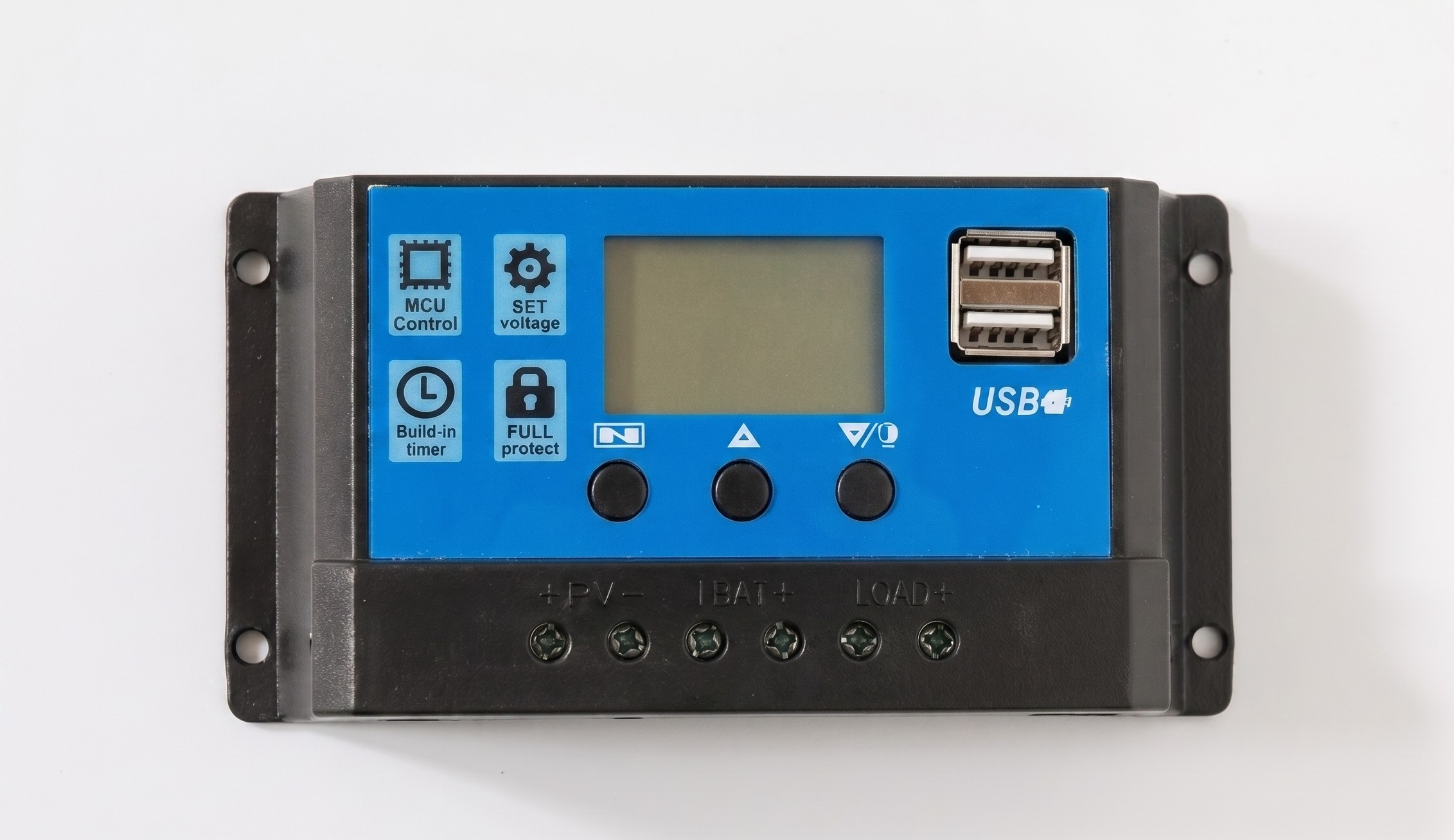
In Off-Grid and Hybrid solar power systems, batteries play an important role as energy storage devices. Electricity generated by solar panels is not always used immediately but can be stored first for use when solar energy production is unavailable.
However, the battery charging process needs to be properly controlled. Overcharging or excessive discharging can affect the battery’s performance and lifespan. Therefore, a solar charge controller is one of the essential components in battery-based solar power systems.
What Is a Solar Charge Controller? Definition and Role
A solar charge controller is an electronic device that regulates the voltage and electrical current flowing from solar panels to the battery. This component ensures that the charging process is carried out according to the battery’s requirements and characteristics.
In solar power systems with energy storage, the solar charge controller acts as a regulator between the solar panels, battery, and, in some systems, the electrical load. Without proper regulation, the battery may receive excessive power or be discharged beyond its safe operating limits.
Therefore, a solar charge controller helps keep the charging process stable, safe, and efficient according to the system specifications and the type of battery being used. Modern charge controllers may also use charging stages such as bulk, absorption, and float to provide more controlled battery charging.
Functions of a Solar Charge Controller in a Solar Power System
Here are several important solar charge controller functions in battery-based solar power systems:
- Prevents overcharging
When the battery reaches a certain state of charge, the solar charge controller reduces or regulates the charging current to prevent the battery from receiving excessive power. - Prevents reverse current
Under certain conditions, particularly when solar panels are not generating electricity, current may potentially flow back toward the panels. A charge controller helps prevent unwanted reverse current. - Protects against over-discharging
Some solar charge controllers have a load-disconnect feature that disconnects the load when the battery voltage reaches a certain low limit. This feature helps prevent excessive battery discharge. - Helps extend battery life
One of the key functions of a solar charge controller is to regulate battery charging and usage cycles, helping maintain battery performance over the long term. - Regulates voltage
A solar charge controller helps adjust the charging process according to the system voltage, such as 12V, 24V, or 48V, depending on the model and system configuration.
Types of Solar Charge Controllers: PWM vs. MPPT
In general, there are two main types of solar charge controllers: PWM and MPPT.
PWM (Pulse Width Modulation)
PWM is a type of solar charge controller with a relatively simple operating system and a more affordable price. This controller connects the solar panels to the battery, causing the panel voltage to generally follow the battery voltage.
This type is generally suitable for small-scale solar power systems with simple configurations and more limited budget requirements. Some PWM models are also equipped with multi-stage charging and low-voltage protection features.
MPPT (Maximum Power Point Tracking)
MPPT is a more advanced type of solar charge controller because it can track the maximum power point of solar panels. MPPT technology can adjust the panel’s input voltage and convert it to match the battery’s charging requirements.
This technology is generally more suitable for medium- to large-scale systems or configurations with higher panel voltages. Depending on the model, MPPT controllers can achieve peak efficiency of around 98%.
Simply put, PWM can be a suitable choice for small and simple systems, while MPPT is more appropriate when system efficiency and configuration flexibility are priorities.
Tips for Choosing the Right Solar Charge Controller
Before purchasing a solar charge controller, consider the following factors:
- Match the system voltage, such as 12V, 24V, or 48V.
- Calculate the current capacity (Amperes) based on the total solar panel power (Watts) and system configuration.
- Choose additional monitoring features, such as an LCD display, Bluetooth, or a mobile application, to make system monitoring easier.
- Make sure the product is genuine and comes with a warranty to ensure better quality and after-sales support from an authorized distributor.
Conclusion
A solar charge controller is an essential component that helps regulate the battery charging process in a solar power system. Various solar charge controller functions, from preventing overcharging and reducing the risk of over-discharging to regulating the charging process, make this component important for maintaining system reliability.
The choice between PWM and MPPT should be based on the solar power system capacity, panel configuration, battery requirements, and desired system efficiency.
Looking for a high-quality solar charge controller for your solar power system? Explore our selection of PWM and MPPT charge controllers with official warranties at Solar Depot, and consult our team about your solar power system component needs.