How to Read a Solar Panel Datasheet: What Voc, Isc, Pmax and Module Efficiency Mean
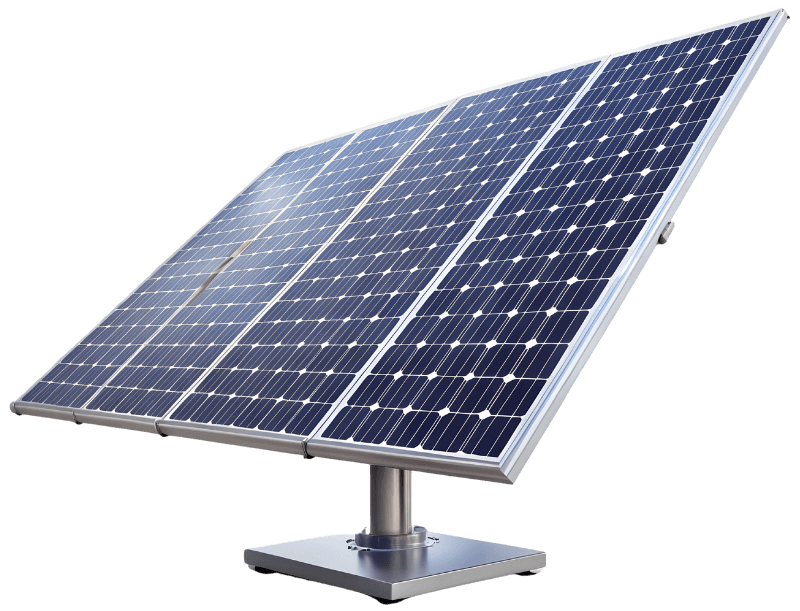
A solar panel datasheet is a technical document that sets out a module’s specifications and performance data, such as maximum power (Pmax), open-circuit voltage (Voc), short-circuit current (Isc), efficiency and temperature characteristics. Understanding these specifications before buying or designing a PV system is important because it helps you confirm that the panels are compatible with the inverter, determine the installation configuration and estimate electricity production more accurately.
For buyers who are new to the subject, a datasheet can look like a table full of baffling technical abbreviations. In fact, the information it contains is the key reference for comparing the performance and quality of several solar panels, rather than simply looking for the highest watt-peak figure. This article explains how to read the main specifications of a solar panel, from Pmax, Voc and Isc to panel efficiency, with simple worked examples.
What a Solar Panel Datasheet Contains
In general, a module datasheet is made up of several groups of information.
1. General information. The brand, module type or series, cell type (for example, monocrystalline TOPCon), number of cells, dimensions and weight. This physical data is important for calculating the roof area required, the strength of the mounting structure and the method of installation.
2. Electrical specifications. These cover Pmax, Voc, Isc, Vmp, Imp and module efficiency. These figures are the core of any system design calculation.
3. Standard Test Conditions (STC). Almost all of the electrical figures above are measured under Standard Test Conditions: irradiance of 1,000 W/m², a cell temperature of 25°C and an air mass of AM 1.5. These conditions are created in a laboratory so that products from any brand can be compared fairly.
4. Supporting parameters. The temperature coefficients, power tolerance, product and performance warranties, and the NOCT/NMOT data.
One thing to bear in mind from the outset: STC is not the condition of your roof. In the field, cell temperatures can reach 60°C or more, irradiance changes throughout the day, and there is dust and shading. For this reason, actual power output almost always differs from the figure on the datasheet. This does not mean the panel fails to meet its specification; it simply means that the test conditions differ from conditions in the field. Keeping this in mind will help you read each of the parameters below in the right perspective. The figures that follow come from a fictitious 550 Wp module so that they are easy to follow.
What Is Voc (Open Circuit Voltage)?
The Voc of a solar panel is the maximum voltage the module produces when its terminals are open, meaning it is not yet connected to a load or inverter and no current is flowing. It is measured in volts (V). For our example module, Voc = 49.5 V.
The effect on series configuration
When several panels are connected in series in a single string, their voltages add together. Ten modules with a Voc of 49.5 V give a string Voc of about 495 V. The number of modules per string determines whether the system voltage stays within the inverter’s operating window.
Beware of low temperatures
Voc rises as temperature falls, and the datasheet lists a Voc temperature coefficient, for example −0.25%/°C. This means that for every 1°C drop below 25°C, the voltage rises by about 0.25%.
For example, at a cell temperature of 10°C (a difference of 15°C), Voc rises by about 3.75%, from 49.5 V to roughly 51.4 V per module. If your inverter has a maximum input voltage limit of 1,000 V:
• 20 modules in series: 20 × 51.4 V ≈ 1,028 V, which exceeds the limit and risks damaging the inverter.
• 19 modules in series: 19 × 51.4 V ≈ 977 V, which is still safe.
This is why string design must never rely solely on Voc at STC. Always calculate Voc at the lowest temperature at the project site, then compare it with the inverter’s maximum Voc.
What Is Isc (Short Circuit Current)?
Isc is the maximum current a module can deliver when its terminals are short-circuited, that is, at zero voltage. It is measured in amperes (A). For the example module, Isc = 13.9 A.
The role of Isc on the electrical side
Isc is used as the basis for determining:
• DC cable capacity, so that the cables do not overheat.
• The rating of the connectors, which must be able to withstand that current.
• Protective devices such as string fuses and DC breakers. Installation standards generally require a value with a safety factor above Isc (often multiplied by 1.25 or more), so the Isc figure used is not simply the raw number. Also note the maximum series fuse rating stated on the datasheet.
The effect of the number of strings
Series connections add voltages, whereas parallel connections add currents. If three strings are connected in parallel to one input, the total current to be accounted for is about 3 × 13.9 A = 41.7 A (before the safety factor is applied). If this figure exceeds the current capacity of the inverter’s MPPT input, you will need to rearrange the string configuration or use a different MPPT input.
What Is Pmax (Maximum Power)?
Pmax is the maximum power a module can produce under STC, expressed in watt-peak (Wp). In our example, Pmax = 550 Wp. This is the figure commonly used as the “label” for a panel’s class, such as a 550 Wp or 600 Wp panel.
How it relates to Vmp and Imp
Pmax is reached at one specific operating point, known as the maximum power point, with a voltage Vmp and a current Imp:
Pmax = Vmp × Imp
For the example module: Vmp 41.5 V × Imp 13.26 A ≈ 550 W. Note that Vmp is lower than Voc and Imp is lower than Isc. An inverter with MPPT continuously searches for this point so that the module operates optimally. For that reason, Vmp and Imp are more relevant for judging compatibility with the inverter’s MPPT window, whereas Voc and Isc are used for safety limits.
Estimating system capacity
Pmax can be used to calculate the total capacity of a PV system: the number of modules multiplied by each module’s Pmax. For example, 100 modules × 550 Wp = 55,000 Wp, or 55 kWp. Remember, however, that this is capacity “on paper” under STC. The energy actually produced is affected by temperature, orientation, shading, cable losses and inverter efficiency.
Understanding Module Efficiency and Supporting Parameters
Conversion efficiency
The efficiency of a solar panel is the percentage of sunlight energy that the module successfully converts into electricity. The formula is:
Efficiency = Pmax ÷ (module area × 1,000 W/m²)
The example module measures about 2.278 m × 1.134 m ≈ 2.58 m². Therefore 550 W ÷ (2.58 m² × 1,000 W/m²) ≈ 21.3%.
In other words, higher efficiency means more power per square metre. This is especially useful when roof area is limited. Where space is ample, a panel with slightly lower efficiency but a friendlier price can still be a sensible choice.
Temperature coefficient, tolerance and degradation
• The Pmax temperature coefficient, for example −0.30%/°C. At a cell temperature of 65°C (40°C above STC), power falls by about 12%, from 550 W to roughly 484 W. In a tropical country such as Indonesia, this figure matters a great deal. A smaller coefficient (a negative value closer to zero) means the panel tolerates heat better.
• Power tolerance, for example 0 to +5 W. A positive tolerance is better because the module will not be shipped below its nominal rating.
• Annual degradation. Every panel loses a little performance over time. Check the first-year and subsequent annual degradation percentages in the performance warranty, for example 1% in the first year and then 0.4% per year.
NOCT or NMOT
NOCT (Nominal Operating Cell Temperature) and its newer counterpart NMOT indicate the cell temperature under conditions closer to reality: irradiance of 800 W/m², an air temperature of 20°C and wind of 1 m/s. The value is typically around 41–45°C. Datasheets also often give power output under these conditions, which is a more realistic basis for estimating daily performance than the STC figure.
How to Compare the Datasheets of Two Solar Panels
Here is a comparison of two fictitious modules:
| Parameter | Panel A | Panel B |
| Pmax (STC) | 550 Wp | 570 Wp |
| Module efficiency | 21.3% | 22.0% |
| Voc | 49.5 V | 51.2 V |
| Isc | 13.9 A | 14.0 A |
| Vmp / Imp | 41.5 V / 13.26 A | 43.0 V / 13.26 A |
| Pmax temperature coefficient | −0.30%/°C | −0.34%/°C |
| Performance warranty | 30 years | 25 years |
| Annual degradation | 0.4% | 0.55% |
The steps for comparing them are as follows:
1. Compare Pmax and efficiency. Panel B comes out ahead here, but check whether the difference justifies the price.
2. Check Voc and Isc. Panel B has a higher Voc, so the number of modules per string may need to be reduced to stay below the inverter’s limit.
3. Check Vmp and Imp against the inverter’s MPPT window.
4. Consider the temperature coefficient, warranty and degradation. In this example, Panel A tolerates heat better and degrades more slowly, so its long-term production may prove more rewarding even though Panel B has the higher Pmax.
5. Do not simply choose the highest watt-peak. Use all of the data as a package, together with the manufacturer’s reputation, certifications and after-sales service. A small difference in efficiency does not necessarily mean a large benefit if the other parameters do not support it.
FAQ: Solar Panel Datasheets
Does a higher Voc mean a better solar panel?
Not automatically. Voc only indicates the no-load voltage, not quality or power output. A higher Voc can actually limit the number of modules per string. Quality is better judged by Pmax, efficiency, temperature coefficient and warranty.
Why does the actual power output of a solar panel differ from the Pmax on the datasheet?
Because Pmax is measured under STC (1,000 W/m² and 25°C), whereas on a roof the module is much hotter and irradiance keeps changing. Add cable losses, dust, shading and inverter efficiency, and it is normal for actual output to be lower than the rated figure.
Does a panel with higher efficiency always generate more electricity?
Not always. Higher efficiency means more power per unit of area. If two panels have the same Pmax and the same installation conditions, they will produce roughly the same amount of energy. High efficiency is most useful when the installation area is limited.
Conclusion
In short, Pmax shows a module’s power capacity, Isc helps determine cables and protection, Vmp and Imp indicate compatibility with the MPPT, efficiency describes power density, and the temperature coefficient and degradation reveal long-term durability. And Voc is the reference point for voltage safety when designing strings, especially at low temperatures.
Matching module specifications to the system design and the needs of the project matters far more than simply chasing the biggest number on the datasheet. The right panel is the one that suits your inverter, available area, budget and production target.
If you are still unsure how to read a datasheet, or would like to compare several module options, Solar Depot is ready to help you choose solar panels and prepare PV equipment that fits your project’s needs.